ZEPHYRATRADING LLC
The Lower Manhattan skyline at night, seen across the water, in black and white.

Wyoming, USA · Proprietary Trading

Independent capital. Disciplined execution.

Zephyra Trading LLC is a private proprietary trading firm focused on U.S. equities and listed options. We trade exclusively with company capital, without managing third-party funds or providing investment advice.

U.S. equities & listed options

Price vs. anchored VWAP

Illustrative · synthetic data, not market data or company results

  • 01

    Proprietary capital

    Company funds only

  • 02

    U.S.-listed markets

    NYSE · Nasdaq · Cboe

  • 03

    Wyoming LLC

    Single-member structure

  • 04

    Risk discipline

    Planned before every entry

01The firm

A focused, independent structure.

Forested river valley in Wyoming beneath a jagged mountain range under heavy cloud.

Zephyra Trading LLC is built around one separation: trading the company's own account on one side, and no form of financial intermediation on the other.

The firm operates as a self-directed trading vehicle. Its research and execution cover U.S. equities and exchange-listed options, with the aim of risk-adjusted returns grounded in preparation rather than prediction.

Company profile

Legal form
Single-member limited liability company
Registration
Wyoming, United States
Capital
Company capital only — no outside investors
Third-party funds
None managed; no customer accounts
Advisory services
None — no investment advice is provided

Zephyra Trading LLC does not solicit, accept or manage money from third parties.

02Markets & horizons

U.S. markets. Multiple horizons.

Activity is limited to liquid U.S.-listed securities, where order books are deep and prices are discovered continuously. Allocation adapts to volatility, market breadth and sector correlation.

Looking straight up between office towers in New York's Financial District under an overcast sky.

Equities

U.S. common stocks

Stocks listed on the NYSE and Nasdaq, with a focus on mid- and large-capitalization companies whose average daily volume exceeds one million shares. Liquidity is a selection criterion, chosen to support orderly entries and exits.

Derivatives

Listed equity & index options

Cboe-listed options used for hedging, for directional exposure with risk defined in advance, and for collecting volatility premium. Positions are monitored through the option Greeks — delta, gamma, vega and theta — which measure sensitivity to price, time and volatility.

Three horizons on one price path

Illustrative · synthetic data, not market data or company results

Trading horizons

  1. Same session

    Intraday

    Short-duration trades around the market open, earnings releases and order-flow imbalances. Intraday positions are closed before the market close.

  2. 2–15 sessions

    Swing

    Multi-day positions in market-leading stocks, typically after a tight consolidation, held to capture a trend extension.

  3. Weeks to months

    Tactical

    Thematic positioning around sector rotation or macroeconomic catalysts, generally structured with defined-risk option spreads.

End-of-day liquidation applies to intraday positions only. Swing and tactical positions may be held overnight and over several sessions.

03Research & execution

Research before execution.

The aim is not to forecast every move, but to identify setups where the potential reward justifies a clearly defined risk.

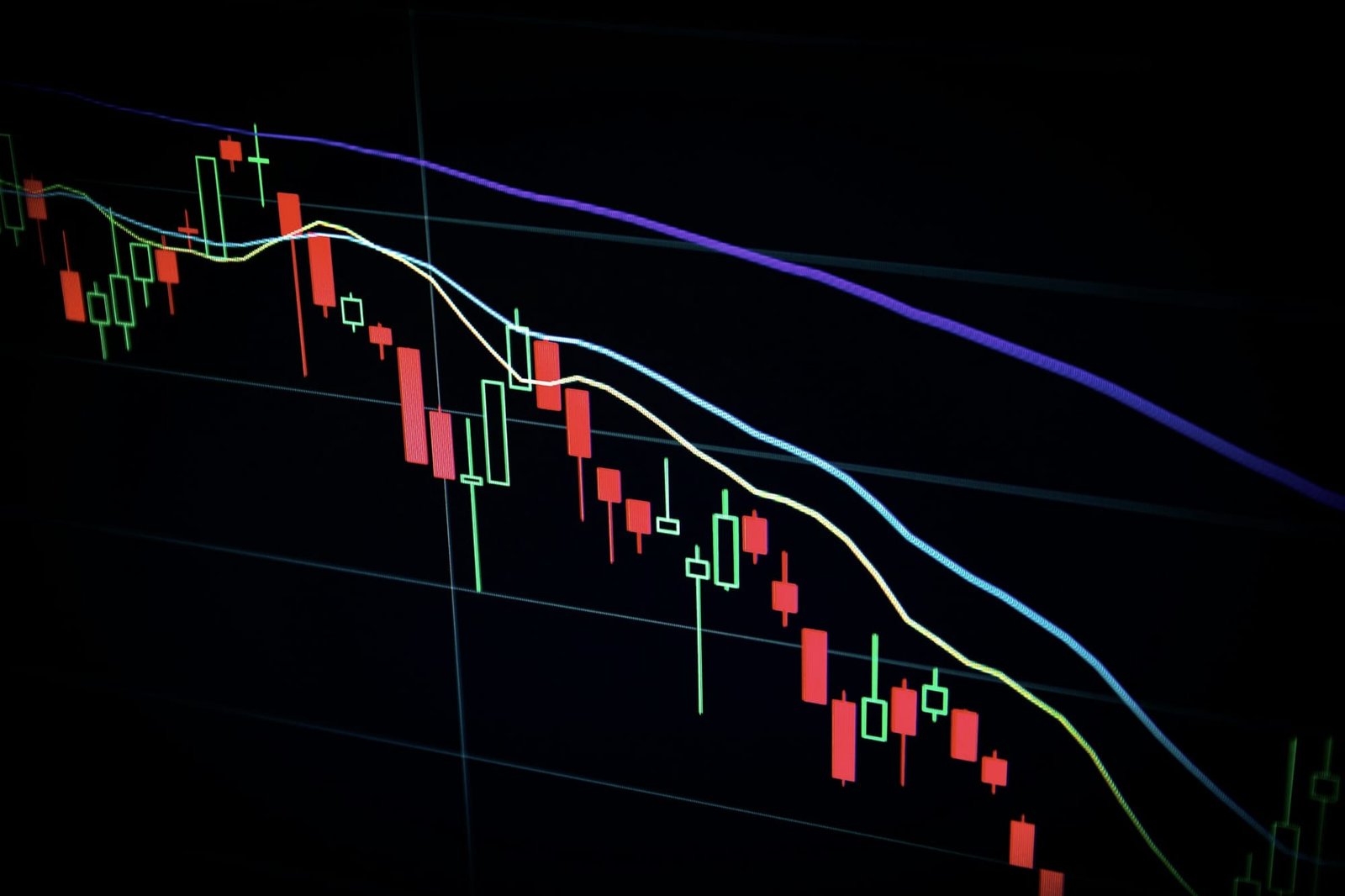
Close-up of a candlestick chart with moving-average lines on a dark trading screen.
Reading structure

Illustrative · synthetic data, not market data or company results

Structure & context

Charts are read across several timeframes alongside anchored VWAP — the volume-weighted average price measured from a chosen event — support and resistance zones, volume profile, and relative strength against the S&P 500 and Nasdaq-100.

Order flow & liquidity

Level II market depth, the time-and-sales tape and footprint charts help show where larger orders are being absorbed, where buyers or sellers are aggressive, and where liquidity is thin.

Execution protocols

  1. Limit orders with attached stops

    Limit orders are preferred to manage market impact and slippage. A stop order is attached once the entry is filled; a stop is an exit instruction, not a guaranteed exit price.

  2. Daily preparation

    A pre-market routine reviews overnight macroeconomic catalysts, pre-market gappers and sector sentiment before the open.

  3. Trade journal

    Every trade is logged: planned versus actual execution price, and initial versus realized risk/reward.

04Risk discipline

Risk discipline at every stage.

Capital preservation comes first. Each position is sized from its exit level before it is opened.

Position sizing

1–2%Planned risk per trade

The company's internal guideline plans the risk of any single trade at 1% to 2% of company capital, measured to the stop-loss level. It is a planning rule, not a limit on actual losses: price gaps and fast markets can produce losses larger than planned.

One trade, planned before entry

1R is the planned loss to the stop — 1–2% of company capital under the internal guideline. Gaps can make actual losses larger.

Daily loss limit

A predefined maximum daily loss applies. When it is reached, trading stops for the rest of the session, to protect capital and limit decisions made under pressure.

Daily loss limit

A four-step cycle

  1. 01

    Prepare

    Scan the universe, form a thesis and size the position from the technical stop.

  2. 02

    Execute

    Enter through a direct-access brokerage platform; confirm the fill and the attached stop.

  3. 03

    Manage

    Track targets, scale out at key levels and move stops to breakeven where appropriate.

  4. 04

    Review

    Export trade data to the journal for a monthly review of win rate, profit factor and expectancy.

05Options strategies

Options within a structured framework.

Each structure has a specific purpose and its own risk profile. Spreads define a maximum theoretical loss at entry; stock-backed and put-selling strategies remain exposed to the underlying shares.

  • Covered callsSelling calls against shares already held, to generate premium income.
    Payoff at expiration

    Illustrative · synthetic data, not market data or company results

    How it works

    A call option is sold against an existing long stock position. The premium adds income, in exchange for giving up gains above the strike price.

    Risk profile

    Upside is capped at the strike price plus the premium received. The downside remains that of the shares: if the stock falls sharply, the premium offsets only a small part of the loss.

  • Cash-secured putsSelling puts fully backed by cash, with the possibility of buying shares at a chosen price.
    Payoff at expiration

    Illustrative · synthetic data, not market data or company results

    How it works

    A put is sold while the full purchase amount is set aside in cash. If the option is assigned, the company buys the shares at the strike price; the premium lowers the effective cost.

    Risk profile

    If the stock falls well below the strike, the position carries a loss similar to owning the shares from that level, reduced only by the premium received.

  • Debit spreadsBull call and bear put spreads, expressing a directional view with less capital.
    Payoff at expiration

    Illustrative · synthetic data, not market data or company results

    How it works

    One option is bought and another, further out of the money and with the same expiration, is sold. The sold option reduces the cost of the position.

    Risk profile

    At expiration, the maximum loss is the net debit paid and the maximum gain is the difference between strikes minus that debit. Early assignment and liquidity can affect results before expiration.

  • Credit spreadsVertical credit spreads and iron condors, collecting premium from time decay.
    Payoff at expiration

    Illustrative · synthetic data, not market data or company results

    How it works

    Options are sold and further out-of-the-money options bought for protection, for a net credit. The position benefits from time decay (theta) and declining implied volatility (vega).

    Risk profile

    The protective options define the maximum theoretical loss — the spread width minus the credit received — which is usually larger than the maximum gain. Assignment and gap risk still apply.

These descriptions are general and for information only. They are not recommendations.

06Research infrastructure

Tools that support the process.

A small set of third-party software supports scanning, charting and screening. Zephyra Trading LLC is a user of these products; no partnership or endorsement is implied.

A desk with a laptop, a large monitor, a tablet and a phone, each displaying market charts. No people are shown.
TradingView
Charting & scripting
Multi-timeframe charts, custom Pine Script indicators that flag volume anomalies, and real-time alerts.
Trade Ideas
Market scanning
AI-assisted real-time scanning for momentum events, unusual volume, gap-and-go patterns and breakouts.
Scanz
Intraday engine
Level 1 and Level 2 data, a corporate news scanner and custom price and volume alerts for intraday trading.
TC2000
Screening & workflows
Screening across U.S.-listed stocks, industry-group strength, watchlists and chart-pattern sorting.


07Contact

Corporate correspondence.

Zephyra Trading LLC does not take on clients, investors or external capital. For corporate and administrative matters, please write to the relevant address below.

Registered address

Zephyra Trading LLC
30 N Gould St STE R
Sheridan, WY 82801, USA